
Damaged Skin Barrier or Acne? How to Tell What's Causing Your Breakouts

Short answer: a damaged skin barrier can cause breakouts, and it can make existing acne redder, sorer and slower to heal. If your skin stings, feels tight, flakes and reacts to products you used to tolerate, your barrier is likely part of the problem, and gentle repair usually helps within a few weeks. But if the barrier is calm again and you're still breaking out, especially on the jawline, around your period, or in deep painful spots, the cause is usually internal: hormones, blood sugar or nutrients. Acne is different for everyone, so the way to know what's driving yours is to test.
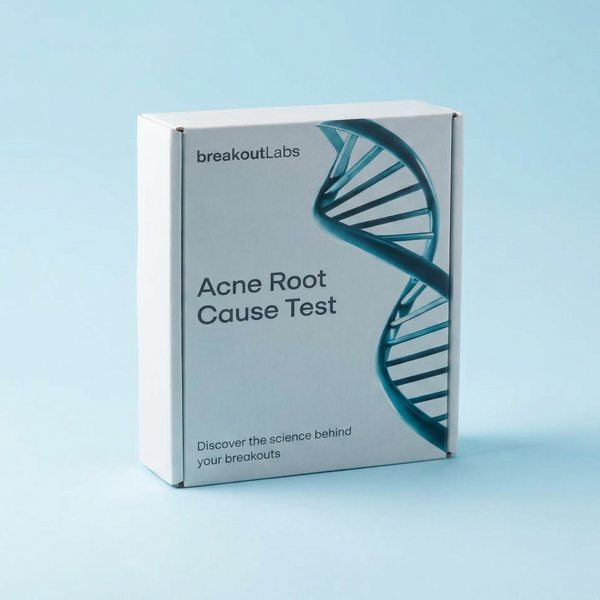
★★★★★ Rated 4.8 by 6,000+ customers
Barrier calm, still breaking out? Find out what's really behind your acne
- At-home test with a painless arm device
- 19 biomarkers across hormones, blood sugar, metabolism and nutrients
- Results in about 5 business days, with a personal Clear Skin Blueprint
What is the skin barrier?
Your skin barrier is the outermost layer of your skin, the stratum corneum. Scientists describe it with a "bricks and mortar" model: flattened skin cells are the bricks, and a mix of fats (mainly ceramides, cholesterol and free fatty acids) is the mortar between them (Proksch et al., 2008). The barrier has two jobs. It keeps water in, and it keeps irritants, allergens and microbes out.
When the wall is intact, skin feels comfortable, bounces back from a long day and handles most products without drama. When gaps open in the mortar, water escapes faster (dermatologists call this transepidermal water loss), and things that should stay outside get in. The result is skin that's dry and reactive at the same time.
Signs of a damaged skin barrier
A compromised barrier tends to announce itself. Common signs:
- Stinging or burning when you apply products that never bothered you before, even plain moisturizer.
- Tightness soon after cleansing, plus dryness that a moisturizer only fixes for an hour or two.
- Flaking or peeling in patches, often around the nose, mouth or wherever you apply actives.
- Diffuse redness that covers an area rather than sitting around individual spots.
- A shiny, tight look that some people describe as "glassy" or "plastic" skin.
- Rough texture and tiny bumps that feel like sandpaper.
- Oily and dry at once: flaky on the surface but greasy by midday.
- More breakouts than usual, or breakouts that heal slowly and leave marks.
If several of these started after you added a new active, upped the strength of something, or began exfoliating more often, that timing is a strong clue.
Can a damaged skin barrier cause acne?
Yes, it can contribute, and the link runs both ways. Researchers have found that people with acne have lower ceramide levels in the skin's outer layer than people without acne, and that lower ceramides go with a weaker water barrier (Yamamoto et al., 1995). A review in the Journal of Clinical and Aesthetic Dermatology looked at this question and concluded that acne-prone skin may have barrier weaknesses, and that some of the most common acne treatments can disrupt the barrier further (Thiboutot and Del Rosso, 2013).
Here is how a weak barrier feeds breakouts:
- Irritation becomes inflammation. Irritants that slip through a leaky barrier trigger redness and swelling, and inflammation is part of how a clogged pore turns into a red, sore spot.
- Dry skin sheds unevenly. Rough, dehydrated skin cells can build up around the pore opening and help plug it.
- Heavy fixes clog pores. When skin feels dry and tight, many people reach for rich oils and balms. Some of those ingredients are known pore-cloggers, which swaps one problem for another.
That said, barrier damage alone rarely explains persistent acne. Acne starts with oil glands, and oil glands take their orders mostly from hormones (Elsaie, 2016). A fragile barrier makes breakouts worse. It usually isn't what starts them.
Damaged barrier vs acne vs both: how to tell
Barrier damage and acne often show up together, which is why they're easy to confuse. This side-by-side helps:
| Mostly barrier damage | Mostly acne | |
|---|---|---|
| What you see | Flaking, diffuse redness, rough patches, tiny even bumps | Blackheads, whiteheads, red bumps, pus-filled spots, deep cysts |
| How it feels | Stinging, burning, tight, itchy | Tender or sore at individual spots |
| Where | Wherever you apply products, often cheeks and around the mouth | Oily zones: forehead, nose, chin, jawline, chest, back |
| When it started | After a new product, stronger active or more exfoliation | Steady over months or years, or with cycle, stress or life changes |
| What makes it better | Stopping actives and moisturizing | Stripping back skincare doesn't clear it |
Both is the most common answer: real acne underneath, made redder and angrier by a routine that's doing too much. The fix is to calm the barrier first, then see what's left. Whatever is still there after a few weeks of gentle care is your actual acne.
How over-treating causes breakouts
Over-treating is one of the most common reasons acne gets worse while you're trying hard to fix it. When a breakout appears, the instinct is to attack it: another acid, a stronger retinoid, a scrub, a drying spot treatment. Each step makes sense alone. Together they can strip the barrier faster than it can rebuild.
The usual culprits:
- Stacking actives. Retinoids, benzoyl peroxide, salicylic acid, glycolic acid and vitamin C used together or on the same nights. Retinoids and benzoyl peroxide work well for acne, but dryness, peeling and irritation are their most common side effects (Reynolds et al., 2024).
- Exfoliating too often. Daily acids or scrubs remove the outer layer before it can renew.
- Harsh cleansing. Foaming cleansers with strong detergents, very hot water and washing more than twice a day all pull out barrier lipids.
- Skipping moisturizer because you have oily skin. Dehydrated skin often looks oilier, not less.
- Constant switching. Changing products every week means your skin never settles, and you can't tell what's helping.
The way out isn't to quit acne treatment. It's to support it. Moisturizers reduce the irritation from acne medications and help people stick with them long enough to work (Chularojanamontri et al., 2014).
Purging or breaking out?
Purging is a short-term increase in breakouts when you start an ingredient that speeds up cell turnover, such as a retinoid. It tends to appear where you normally break out and settles within a few weeks. If new spots show up in places you never break out, come with stinging and flaking, or keep going past six to eight weeks, it's more likely irritation or a product that doesn't suit you.
How to repair a damaged skin barrier
Barrier repair is mostly about doing less, consistently. A simple plan:
- Pause the extras for 1 to 2 weeks. Stop exfoliating acids, scrubs, peels and strong spot treatments. If you use a prescription, ask your prescriber before stopping it; often you can just use it less often.
- Cleanse gently. A mild, non-foaming or low-foam cleanser with lukewarm water, once or twice a day.
- Moisturize with barrier lipids and humectants. Look for ceramides, cholesterol, fatty acids, glycerin, hyaluronic acid or niacinamide. These match what the barrier is made of (Proksch et al., 2008).
- Check for pore-cloggers. Rich, healing creams are where pore-clogging ingredients often hide. Run your moisturizer through our free Pore Clogger Checker before you commit, or see our picks for non-comedogenic moisturizers.
- Wear sunscreen daily. UV damage slows repair and darkens the marks breakouts leave behind.
- Reintroduce one active at a time. Once stinging and flaking have stopped, bring back your most useful acne treatment first, a few nights a week, and build up slowly.
How long does barrier repair take? Mild irritation often calms within one to two weeks. Skin that's been over-treated for months can take four weeks or more, since the outer layer needs time to renew.
Is this you?
- ☐ I've repaired my routine and the stinging is gone, but I'm still breaking out
- ☐ My breakouts are deep, painful or cystic
- ☐ They cluster on my chin and jawline
- ☐ They flare in the week before my period
- ☐ I've tried more products than I can count, and nothing sticks
If two or more sound like you, the cause is likely internal, and no product on your shelf can show you that. A blood test can.
Find my root causeHow to tell what kind of acne you have
There are two useful ways to sort acne. The first is what it looks like on the skin, which is how dermatologists grade it:
- Comedones: blackheads (open) and whiteheads (closed). Clogged pores without much inflammation.
- Papules: small red, tender bumps.
- Pustules: red bumps with a white or yellow center.
- Nodules and cysts: large, deep, painful lumps that can last for weeks and leave scars.
That tells you what's happening in the pore. It doesn't tell you why. The second way is to sort acne by what's likely driving it from the inside, and that's where the pattern of your breakouts gives useful clues.
Types of acne by internal driver
These types overlap, and most people have more than one. Use them as clues, not a diagnosis.
1. Hormonal acne
Clues: breakouts on the chin, jawline and neck; flares in the week before your period; deep, tender spots that linger; acne that started or came back in your twenties, thirties or forties, or after stopping the pill.
What's behind it: androgens such as testosterone and DHEA-S tell oil glands to make more oil (Elsaie, 2016). What matters most is free testosterone, the part not held back by a protein called SHBG. In a study of 129 adult women with acne, most had at least one raised androgen, and lower SHBG went with more severe acne (Borgia et al., 2004). Adult female acne typically clusters on the lower face (Dréno et al., 2013). More in testosterone and acne and signs of hormonal acne.
How we check this: The Acne Root Cause Test measures total and free testosterone, SHBG, DHEA-S, the Free Androgen Index and albumin, so you can see if androgens are driving your breakouts.See what's tested
2. Blood sugar acne
Clues: breakouts that track with sugary or refined-carb eating; energy crashes or cravings; acne alongside weight changes around the middle; a PCOS diagnosis or family history of diabetes.
What's behind it: high insulin lowers SHBG, which frees up more testosterone, and pushes the body to make more androgens (Elsaie, 2016). So blood sugar can act like a hormone amplifier. In a randomized trial, young men who ate a low-glycemic-load diet for 12 weeks had fewer acne lesions than those on their usual diet (Smith et al., 2007). A second trial found smaller oil glands and less inflammation in the skin after a low-glycemic-load diet (Kwon et al., 2012). See how blood sugar affects your skin.
How we check this: The Acne Root Cause Test measures HbA1c and average glucose, plus a full cholesterol and triglyceride panel, so you can see if blood sugar and metabolism are amplifying your hormones.See what's tested
3. Nutrient-related acne
Clues: inflamed breakouts that heal slowly; little time outdoors or darker skin in a northern climate; a restrictive diet; fatigue.
What's behind it: your skin needs certain nutrients to regulate inflammation and repair. Vitamin D is the best studied: in one study, vitamin D deficiency was about twice as common in people with acne as in those without, lower levels went with more inflammatory lesions, and supplementing improved those lesions in deficient patients (Lim et al., 2016). Read more in vitamin D and acne.
How we check this: The Acne Root Cause Test measures your vitamin D, so you can see if you're running low on a nutrient your skin needs to heal.See what's tested
4. Inflammatory acne
Clues: mostly red, swollen papules, pustules and cysts rather than blackheads; spots that hurt; breakouts that leave dark marks or scars.
What's behind it: inflammatory acne is less a separate cause than a sign that something is fuelling the fire. Extra oil from androgens, blood sugar swings and low vitamin D all show up in inflamed acne in the studies above. That's why it helps to look at those drivers together rather than one at a time.
How we check this: The Acne Root Cause Test looks at the drivers that feed inflamed breakouts (androgens and SHBG, HbA1c and vitamin D) together, from one sample.See what's tested
5. Barrier or irritant acne
Clues: breakouts that started with a new product or routine; stinging, flaking and redness alongside the spots; bumps where products go, not just in oily zones.
What's behind it: this is the outside-in type covered above. It's the one type that usually improves with gentler skincare alone.
Mixed acne
Most people are a combination: hormonal acne made worse by blood sugar, with an irritated barrier on top. That's normal, and it's why single fixes often only half work.
When it's not your skin barrier
Here's the practical test. Give your barrier four to six weeks of gentle, consistent care. If stinging and flaking are gone but breakouts keep coming, especially with any of these patterns, look inside:
- Breakouts cluster on your chin and jawline.
- They flare on a monthly rhythm.
- Spots are deep, painful and slow to heal.
- Acne started after 25, after stopping birth control, or after a big life change.
- It returned after Accutane or keeps coming back after treatment.
- You've tried more products than you can count, and nothing sticks.
Skincare can't change the hormones, blood sugar or nutrient levels behind these patterns. You can't see them in the mirror either. A blood test is how you find out which ones are yours. Our guide to blood tests for acne explains which markers matter and why.
★★★★★
"As someone who spent over $1,000 this year on skincare, I wish I had found this sooner. No more guessing. No more wasting money. Just real answers."
Kylie L. · Verified BreakoutLabs customer
Your options for finding the cause, compared
| Guessing (new products, stripping your routine) | Dermatologist visit | In-clinic lab draw | BreakoutLabs | |
|---|---|---|---|---|
| Looks inside your body | No | Rarely | Only what's ordered | Yes, 19 biomarkers |
| Built for acne | No | Treats the surface | General panels | Yes |
| Time to an answer | Months, often never | Weeks for an appointment | Referral, visit, then wait | About 5 business days |
| From home | Yes | No | No, needle draw | Yes, painless arm device |
| Plan you can act on | No | Usually a prescription | Numbers only | Personal Clear Skin Blueprint |
In our own data from 1,814 acne blood tests, about 1 in 3 people had a key marker out of range. See what we found.
Why test with BreakoutLabs
If your barrier is calm and you're still breaking out, another product won't fix it. The next step is to find out what's driving your acne from the inside, and the Acne Root Cause Test is the fastest, simplest way to do that. It was built for exactly this moment: when your routine is sorted and your acne still isn't.
- Built only for acne. Every marker is chosen, and every result is read, for breakouts.
- At home, with a painless device on your upper arm. No lab visit, no appointment, no needle draw.
- 19 biomarkers across hormones, blood sugar, metabolism and nutrients: Free and Total Testosterone, SHBG, DHEA-S, Free Androgen Index and Albumin; HbA1c, average glucose and a full cholesterol and triglyceride panel; ALT, Creatinine and eGFR; and Vitamin D.
- Results about 5 business days after our CLIA-certified lab receives your sample. Every test is authorized by a licensed physician.
- A personalized Clear Skin Blueprint that reads your results for your skin and turns them into next steps, so you stop guessing and start treating the real cause.
- HSA/FSA eligible and backed by our 30-day money-back guarantee.
- Rated 4.8/5 by 6,000+ customers.
Collect in the morning after an 8 to 10 hour fast, Monday to Thursday, and on days 3 to 7 of your cycle if you menstruate. For ages 14 and up (14 to 17 with a parent or guardian).
Stop guessing what's behind your breakouts
One at-home test. 19 biomarkers. Answers in about 5 business days. And if every marker comes back in normal range, our 30-day money-back guarantee has you covered.
See today's offerHSA/FSA eligible · Rated 4.8 by 6,000+ customers
Frequently asked questions
Can a damaged skin barrier cause acne?
It can trigger breakouts and make existing acne more inflamed, mainly through irritation and through the heavy products people use to soothe dry skin. But persistent acne usually has an internal driver too, such as hormones or blood sugar. If your barrier has healed and you're still breaking out, look inside.
How do I know if my skin barrier is damaged?
Stinging or burning with gentle products, tightness after washing, flaking, diffuse redness and a rough texture are the classic signs. They often start after adding a new active or exfoliating more often.
How long does it take to repair a damaged skin barrier?
Mild damage often settles in one to two weeks of gentle care. Longer-term over-treatment can take four weeks or more.
How to tell what kind of acne you have?
Look at two things: what the spots are (blackheads, whiteheads, red bumps, pustules or cysts) and the pattern (where they appear, when they flare and what they track with). Jawline and cycle flares point to hormones; breakouts that follow sugary eating point to blood sugar. A blood test confirms which drivers are actually out of range for you.
What are the types of acne?
By appearance: comedones (blackheads and whiteheads), papules, pustules, nodules and cysts. By likely cause: hormonal, blood sugar, nutrient-related, inflammatory and barrier or irritant acne, and most people have a mix.
Is my acne hormonal or from a damaged skin barrier?
Barrier acne comes with stinging, flaking and redness and improves when you simplify your routine. Hormonal acne sits on the chin and jawline, follows your cycle and doesn't clear with gentler skincare. Testing your hormones and blood sugar shows whether they're part of it.
Can over-exfoliating cause acne?
Yes. Exfoliating too often strips the barrier, which leads to irritation, inflammation and more breakouts. Cut back to a gentle routine, then reintroduce one active slowly.
Sources
- Proksch E, Brandner JM, Jensen JM. The skin: an indispensable barrier. Experimental Dermatology. 2008.
- Yamamoto A, Takenouchi K, Ito M. Impaired water barrier function in acne vulgaris. Archives of Dermatological Research. 1995.
- Thiboutot D, Del Rosso JQ. Acne vulgaris and the epidermal barrier: is acne vulgaris associated with inherent epidermal abnormalities that cause impairment of barrier functions? Do any topical acne therapies alter the structural and/or functional integrity of the epidermal barrier? Journal of Clinical and Aesthetic Dermatology. 2013.
- Chularojanamontri L, Tuchinda P, Kulthanan K, Pongparit K. Moisturizers for acne: what are their constituents? Journal of Clinical and Aesthetic Dermatology. 2014.
- Reynolds RV, Yeung H, Cheng CE, et al. Guidelines of care for the management of acne vulgaris. Journal of the American Academy of Dermatology. 2024.
- Elsaie ML. Hormonal treatment of acne vulgaris: an update. Clinical, Cosmetic and Investigational Dermatology. 2016.
- Borgia F, Cannavò S, Guarneri F, et al. Correlation between endocrinological parameters and acne severity in adult women. Acta Dermato-Venereologica. 2004.
- Dréno B, Layton A, Zouboulis CC, et al. Adult female acne: a new paradigm. Journal of the European Academy of Dermatology and Venereology. 2013.
- Smith RN, Mann NJ, Braue A, Mäkeläinen H, Varigos GA. A low-glycemic-load diet improves symptoms in acne vulgaris patients: a randomized controlled trial. American Journal of Clinical Nutrition. 2007.
- Kwon HH, Yoon JY, Hong JS, et al. Clinical and histological effect of a low glycaemic load diet in treatment of acne vulgaris in Korean patients: a randomized, controlled trial. Acta Dermato-Venereologica. 2012.
- Lim SK, Ha JM, Lee YH, et al. Comparison of vitamin D levels in patients with and without acne: a case-control study combined with a randomized controlled trial. PLOS ONE. 2016.
This article is for educational purposes and is not medical advice. Talk to your healthcare provider about testing and treatment.


