
Do Eggs Cause Acne? What the Research Says and What to Check Instead

Short answer: for most people, eggs don't cause acne. No good study has shown that eating eggs leads to breakouts, and eggs are a low-sugar, protein-rich food that fits well in a skin-friendly diet. But food reactions differ from person to person, and when someone swears eggs break them out, the real driver is often something eggs travel with: a sugary breakfast, a sensitivity, a supplement, or a hormone or blood sugar pattern that would be there with or without the eggs. Cutting foods one by one is slow guesswork. The way to know is to test.
★★★★★ Rated 4.8 by 6,000+ customers
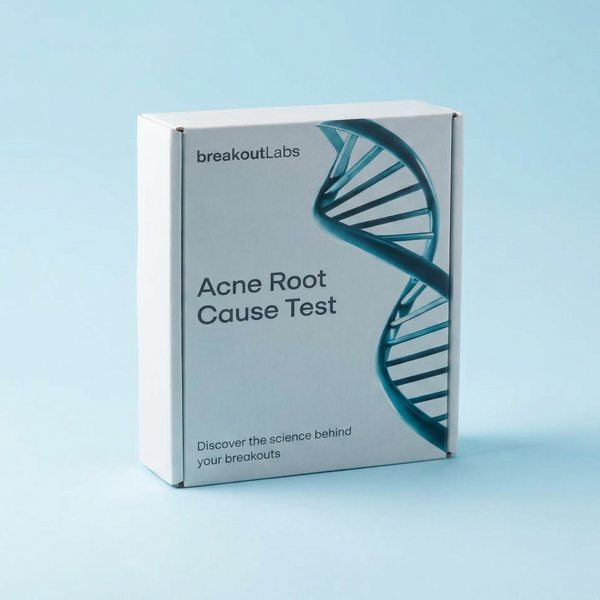
Find out what's really driving your breakouts, eggs or not
- At-home test with a painless arm device
- 19 biomarkers across hormones, blood sugar, metabolism and nutrients
- Results in about 5 business days, with a personal Clear Skin Blueprint
Do eggs cause acne?
Here's where the research stands. Reviews of diet and acne keep landing on the same two food groups with the most evidence: high glycemic foods (sugar, white bread, sweet drinks) and milk and dairy (Bowe et al., 2010; Burris et al., 2013). In a large French study of adults, the foods tied to current acne were milk, sugary drinks and fatty, sugary products (Penso et al., 2020). Eggs have never been shown to directly trigger acne.
That doesn't mean your experience is wrong. If you break out after egg-heavy weeks, something is going on. It's just rarely the egg itself. The most common explanations:
- What comes with the eggs. A breakfast sandwich on a white bun, a glass of orange juice, cheese, bacon or a sweet coffee drink. The sugar and dairy have more evidence behind them than the egg does.
- A food sensitivity. Some people genuinely don't tolerate eggs well. More on how to tell below.
- Timing. Acne takes weeks to form, so the food you ate yesterday is rarely what caused today's breakout. Your cycle, stress, sleep and a new skincare product can all land in the same week as an omelet.
- An inside driver you can't see. High free testosterone, low SHBG or blood sugar swings will cause breakouts whatever you eat. Diet can nudge them, but it doesn't create them from nothing.
Does egg cause acne through hormones?
A common worry is that eggs are "full of hormones". Eggs, like milk and meat, naturally contain tiny amounts of estrogens and androgens, because hens make them too (Courant et al., 2007). But the amounts are very small compared with the hormones your own body makes every day, and there's no evidence that the hormones in eggs raise your testosterone or trigger acne.
Milk is a different story. Dairy raises insulin and IGF-1, growth signals that can push oil glands harder, which is part of why it shows up in acne research (Bowe et al., 2010). Eggs don't have that effect. They're low glycemic, and swapping a sugary breakfast for an egg-based one actually moves you in the direction that's been shown to help acne. In a randomized trial, young men on a higher-protein, low glycemic load diet had fewer acne lesions after 12 weeks than those on their usual diet (Smith et al., 2007).
The hormones that really matter for acne are the ones in your blood: free testosterone, SHBG and DHEA-S. Those come from your ovaries, testes and adrenal glands, not your breakfast. See hormonal acne signs.
How we check this: The Acne Root Cause Test measures Free and Total Testosterone, SHBG and DHEA-S, so you can see if your hormones, not your eggs, are driving your breakouts. See what's tested
Biotin, avidin and the egg white theory
This is the most specific egg and acne theory online, so let's untangle it.
Avidin. Raw egg whites contain a protein called avidin that binds tightly to biotin (vitamin B7) and keeps you from absorbing it. Eating large amounts of raw egg white for a long time can cause biotin deficiency, with symptoms like a scaly rash and thinning hair (Baugh et al., 1968; NIH Office of Dietary Supplements, Biotin). Cooking breaks avidin down, so cooked eggs don't block biotin. And the rash of biotin deficiency is not acne.
Biotin supplements. The more common complaint goes the other way: people taking high-dose biotin for hair and nails who notice breakouts. The theory is that a large biotin dose competes with vitamin B5 for absorption. The evidence is mostly anecdotal, but if your skin changed after starting a "hair, skin and nails" supplement, that timing is worth noting. Egg yolks contain some biotin, but nowhere near supplement doses (NIH Office of Dietary Supplements, Biotin). More in which B vitamins cause acne and supplements that cause acne.
One practical point: high-dose biotin can interfere with some blood tests, including hormone tests (Li et al., 2020). If you take biotin, tell whoever runs your bloodwork.
Egg allergy, sensitivity and your skin
Egg allergy is one of the most common food allergies in young children. Many outgrow it, though often later than people expect, sometimes not until the teen years (Savage et al., 2007). A true egg allergy usually shows up fast, within minutes to a couple of hours, as hives, swelling, itching, stomach upset or trouble breathing. That's an immune reaction, and it needs an allergist, not an acne plan. Hives and acne look different: hives are raised, itchy welts that come and go within hours, while acne bumps form in pores and last for days.
A food sensitivity or intolerance is less clear-cut. It's not an allergy, but some people feel worse, bloated or inflamed after certain foods, and some notice their skin flares too. The gut and skin do talk to each other, mostly through inflammation and blood sugar (see the gut-skin connection).
Be careful with at-home "food sensitivity" kits that measure IgG antibodies. A European allergy task force concluded that IgG4 food testing isn't a valid diagnostic tool, because these antibodies mostly show that you've eaten a food, not that it harms you (Stapel et al., 2008). Plenty of people cut eggs, and other good foods, because of these results without their skin changing at all.
Is this you?
- ☐ You've cut eggs, dairy or sugar, and the breakouts came back anyway.
- ☐ Your breakouts sit on your chin and jawline.
- ☐ They flare in the week before your period.
- ☐ You eat well, but your skin doesn't seem to notice.
- ☐ Your skin is oily and the bumps are deep and sore.
If two or more sound like you, the cause is likely internal, and no product on your shelf can show you that. A blood test can.
Find my root cause★★★★★
"I've tried cutting dairy, sugar, skincare swaps you name it. Nothing stuck. This test showed me why my acne wasn't responding and the recommendations were realistic. For the first time in years, I'm not dealing with recurring cysts."
Jordan L. · Verified BreakoutLabs customer
Are eggs inflammatory?
You'll see eggs on plenty of "inflammatory foods" lists. For most people, that's an oversimplification. Eggs are a whole food with protein and healthy fats and no added sugar. There's no evidence they raise inflammation in people without an egg allergy or sensitivity.
What does drive inflammation and oil? Blood sugar spikes. When insulin runs high, SHBG drops and more testosterone is free to act on your skin. That's why the bread, juice and syrup around the eggs matter more than the eggs themselves. HbA1c shows your average blood sugar over about three months. See how blood sugar affects your skin.
How we check this: The Acne Root Cause Test measures HbA1c and average glucose, so you can see if the carbs around your eggs are pushing your blood sugar and your breakouts. See what's tested
What eggs do for your skin
For most acne-prone people, eggs are more likely to help than hurt. Here's what they bring:
1. Vitamin A
Egg yolks contain retinol, the active form of vitamin A. Vitamin A keeps skin cells turning over normally, and it's the same family prescription retinoids come from. Food sources won't act like a prescription, but they help cover your baseline needs.
2. Vitamin D
Egg yolks are one of the few foods that naturally contain vitamin D (NIH Office of Dietary Supplements, Vitamin D). That matters because people with acne tend to have lower vitamin D, and in one trial, people with low levels who took vitamin D saw their inflammatory acne improve (Lim et al., 2016). Vitamin D is one of the 19 markers in the BreakoutLabs test. More in vitamin D and acne.
3. Protein and choline
Eggs are an easy source of high-quality protein, which your skin uses to repair itself, and choline, a nutrient your liver uses to process fats. Protein at breakfast also helps keep blood sugar steadier through the morning than a carb-only meal.
4. Zinc and selenium
Eggs supply small amounts of zinc and selenium. Zinc is the better studied of the two for acne: a meta-analysis found people with acne had lower blood zinc on average (Yee et al., 2020).
Eggs and cholesterol
If you eat eggs most days, you may also wonder about cholesterol. For most people, dietary cholesterol has a smaller effect on blood cholesterol than once thought, but it varies from person to person. The simplest way to know where you stand is to check.
How we check this: The Acne Root Cause Test measures total cholesterol, HDL, LDL, VLDL and triglycerides alongside your acne markers, so you can eat eggs knowing your numbers. See what's tested
Iodine and egg yolks
Another theory points to iodine. Egg yolks contain iodine (NIH Office of Dietary Supplements, Iodine), and very high iodine intake, mostly from supplements, kelp or medications, has been linked to acne-like breakouts. The amount in a normal serving of eggs is modest, and there's no good evidence that eating eggs causes acne through iodine. If you take kelp or iodine supplements, those are a more likely suspect than eggs.
What if eggs do seem to trigger your acne?
Your experience matters, and you don't need to eat something that doesn't agree with you. But before you cut eggs for good, rule out the things that are easier to miss:
- Look at the whole meal. Is it the eggs, or the bun, juice, cheese or sweet coffee next to them?
- Check your supplements. High-dose biotin, whey protein and kelp are more common acne suspects than eggs.
- Check your skincare. A new cleanser, sunscreen or egg-based face mask can cause breakouts that get blamed on food. Run ingredient lists through our free Pore Clogger Checker.
- Track your cycle. If you menstruate, breakouts the week before your period are hormonal, whatever you ate.
- Check your inside drivers. Hormones and blood sugar explain far more acne than any single food.
Elimination diets vs testing
The usual advice is to cut eggs for four weeks, then add them back and watch. It can work for a true sensitivity, but it has real limits for acne:
- Acne is slow. A pimple takes weeks to form, and it can take two to three months to see a clear change. Testing one food at a time can take a year.
- Too much changes at once. Your cycle, stress, sleep, the weather and your skincare all shift during an elimination window, so it's hard to know what made the difference.
- It can't see the cause. If your acne is driven by low SHBG or blood sugar, cutting eggs won't fix it, and you'll lose a good food for nothing.
Testing flips the order. Check the inside drivers first: free testosterone, SHBG, DHEA-S, HbA1c and vitamin D. Then make food changes that match what you find. If your blood sugar is the issue, that points you to the carbs around your eggs, not the eggs. If your hormones are the issue, that's a conversation for your doctor, with numbers in hand. For a broader look at which labs matter, see blood tests for acne.
Practical takeaways: eggs and acne
- Eggs don't directly cause acne for most people.
- They bring vitamin A, vitamin D, protein, choline and zinc, all useful for skin.
- Cook them. Raw egg whites block biotin; cooked ones don't.
- Look at what you eat with your eggs. Sugar and dairy have more evidence than eggs.
- A true egg allergy causes hives and swelling, not acne, and needs an allergist.
- Skip IgG food sensitivity kits. They don't show what's harming your skin.
- If your acne keeps coming back no matter what you cut, test your hormones and blood sugar.
Your options for finding the cause, compared
| Guessing (cutting foods one at a time) | Dermatologist visit | In-clinic lab draw | BreakoutLabs | |
|---|---|---|---|---|
| Looks inside your body | No | Rarely | Only what's ordered | Yes, 19 biomarkers |
| Built for acne | No | Treats the surface | General panels | Yes |
| Time to an answer | Months, often never | Weeks for an appointment | Referral, visit, then wait | About 5 business days |
| From home | Yes | No | No, needle draw | Yes, painless arm device |
| Plan you can act on | No | Usually a prescription | Numbers only | Personal Clear Skin Blueprint |
Why test with BreakoutLabs
Cutting foods one at a time can take a year and still miss the cause. The Acne Root Cause Test gets you a real answer in days. It checks the inside drivers that food acts on, so you know exactly what to change instead of guessing:
- At home, with a painless device on your upper arm. No lab visit, no appointment, no needle draw.
- 19 biomarkers across hormones, blood sugar, metabolism and nutrients: Free and Total Testosterone, SHBG, DHEA-S, Free Androgen Index and Albumin; HbA1c, average glucose and a full cholesterol and triglyceride panel; ALT, Creatinine and eGFR; and Vitamin D.
- Ordered by a licensed physician and run by a CLIA-certified lab.
- Results in 5 business days after the lab receives your sample.
- A personalized Clear Skin Blueprint that reads your results through the lens of acne, including what your blood sugar and vitamin D mean for the way you eat.
- HSA/FSA eligible, and backed by our 30-day money-back guarantee.
Collect in the morning after an 8 to 10 hour fast, Monday to Thursday, and on days 3 to 7 of your cycle if you menstruate. For ages 14 and up (14 to 17 with a parent or guardian).
Stop guessing which food is the problem
One at-home test. 19 biomarkers. Answers in about 5 business days. And if every marker comes back in normal range, our 30-day money-back guarantee has you covered.
See today's offerHSA/FSA eligible · Rated 4.8 by 6,000+ customers
Frequently asked questions
Do eggs cause acne?
For most people, no. No good study has linked eating eggs to acne. The foods with the most evidence are high glycemic foods and dairy. If you break out after eating eggs, look at what you eat with them, your supplements and your hormones and blood sugar.
Does egg cause acne in some people?
Some people do react to eggs, usually through a food sensitivity, and food reactions differ from person to person. But true egg-triggered acne is uncommon, and breakouts blamed on eggs often trace back to another cause. Testing your hormones and blood sugar helps rule the bigger drivers in or out.
Can eggs cause acne on the face or chin?
There's no evidence that eggs cause acne in a particular spot. Breakouts on the chin and jawline are a classic hormonal pattern, often tied to free testosterone, SHBG or blood sugar, not to a single food.
Do egg whites or egg yolks cause acne?
Neither has been shown to cause acne. Raw egg whites contain avidin, which blocks biotin, but cooking breaks it down. Egg yolks contain vitamin A and vitamin D, which support skin.
Can an egg allergy cause acne?
An egg allergy causes hives, swelling, itching or stomach symptoms, usually within minutes to hours. That isn't acne. If you suspect an allergy, see an allergist.
Are eggs good for acne-prone skin?
For most people, yes. Eggs are low glycemic and provide protein, vitamin A, vitamin D, choline and zinc. Pair them with low-sugar sides for the most skin-friendly breakfast.
Should I stop eating eggs if I have acne?
Not unless you have an allergy or a clear, repeated reaction. Cutting foods one at a time is slow and often misses the real cause. Checking your hormones, blood sugar and vitamin D first tells you where to focus.
Sources
- Bowe WP, Joshi SS, Shalita AR. Diet and acne. Journal of the American Academy of Dermatology. 2010.
- Burris J, Rietkerk W, Woolf K. Acne: the role of medical nutrition therapy. Journal of the Academy of Nutrition and Dietetics. 2013.
- Penso L, Touvier M, Deschasaux M, et al. Association between adult acne and dietary behaviors: findings from the NutriNet-Santé prospective cohort study. JAMA Dermatology. 2020.
- Courant F, Antignac JP, Maume D, et al. Determination of naturally occurring oestrogens and androgens in retail samples of milk and eggs. Food Additives and Contaminants. 2007.
- Smith RN, Mann NJ, Braue A, Mäkeläinen H, Varigos GA. A low-glycemic-load diet improves symptoms in acne vulgaris patients: a randomized controlled trial. American Journal of Clinical Nutrition. 2007.
- Baugh CM, Malone JH, Butterworth CE Jr. Human biotin deficiency: a case history of biotin deficiency induced by raw egg consumption in a cirrhotic patient. American Journal of Clinical Nutrition. 1968.
- NIH Office of Dietary Supplements. Biotin: fact sheet for health professionals.
- Li D, Ferguson A, Cervinski MA, Lynch KL, et al. AACC guidance document on biotin interference in laboratory tests. Journal of Applied Laboratory Medicine. 2020.
- Savage JH, Matsui EC, Skripak JM, Wood RA. The natural history of egg allergy. Journal of Allergy and Clinical Immunology. 2007.
- Stapel SO, Asero R, Ballmer-Weber BK, et al. Testing for IgG4 against foods is not recommended as a diagnostic tool: EAACI Task Force Report. Allergy. 2008.
- NIH Office of Dietary Supplements. Vitamin D: fact sheet for health professionals.
- Lim SK, Ha JM, Lee YH, et al. Comparison of vitamin D levels in patients with and without acne: a case-control study combined with a randomized controlled trial. PLoS One. 2016.
- Yee BE, Richards P, Sui JY, Marsch AF. Serum zinc levels and efficacy of zinc treatment in acne vulgaris: a systematic review and meta-analysis. Dermatologic Therapy. 2020.
- NIH Office of Dietary Supplements. Iodine: fact sheet for health professionals.
This article is for educational purposes and is not medical advice. Talk to your healthcare provider about testing and treatment.


