
IUD and Mirena Acne: Why It Happens and Will It Go Away?

Short answer: yes, a hormonal IUD like Mirena can cause acne. It releases levonorgestrel, a progestin made from a testosterone-like structure that can act a little like an androgen on your oil glands, and unlike the pill there's no estrogen in it to balance that out. In clinical trials, about 15% of hormonal IUD users developed acne, and the higher-dose devices showed the highest rates (de Oliveira et al., 2026). A copper IUD has no hormones. For some people IUD acne settles, for others it lingers or shows up after removal, and the reason is usually the androgen and blood sugar picture underneath. That's different for everyone, so the way to know is to test.
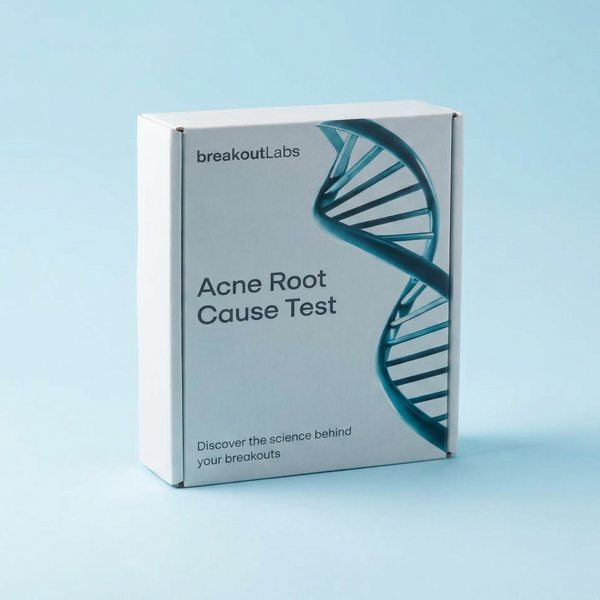
★★★★★ Rated 4.8 by 6,000+ customers
Find out what's really behind your IUD acne
- At-home test with a painless arm device
- 19 biomarkers across hormones, blood sugar, metabolism and nutrients
- Results in about 5 business days, with a personal Clear Skin Blueprint
Does Mirena cause acne?
It can, and you're not imagining it. Acne is one of the most commonly reported side effects of hormonal IUDs.
- The trials. A 2026 meta-analysis pooled nine randomized trials covering 6,305 levonorgestrel IUD users. Overall, 15% developed acne. Among users of the 52 mg devices (the dose in Mirena and Liletta), the rate was 19.5%, compared with 13.1% for the lowest-dose 13.5 mg device. Trials that enrolled younger women, with an average age of about 24, also reported more acne (de Oliveira et al., 2026).
- Real-world patients. In a review of 2,147 women seeing a dermatologist for acne while on hormonal birth control, hormonal IUDs, the implant and the shot made acne worse on average, while the vaginal ring and combined pills improved it on average (Lortscher et al., 2016).
So most people with a hormonal IUD don't break out from it. But a meaningful minority do, and the odds go up with a higher dose, a younger age and, very likely, a skin that was already sensitive to androgens.
Hormonal vs copper IUD: which ones can cause acne?
| IUD | What it releases | Hormone dose | Link to acne |
|---|---|---|---|
| Mirena, Liletta | Levonorgestrel | 52 mg | Highest acne rate of the hormonal IUDs in trials (de Oliveira et al., 2026) |
| Kyleena | Levonorgestrel | 19.5 mg | Middle dose. Too few trials to pool separately (de Oliveira et al., 2026) |
| Skyla | Levonorgestrel | 13.5 mg | Lowest acne rate of the hormonal IUDs in trials (de Oliveira et al., 2026) |
| Paragard | Copper, no hormones | None | Doesn't add any hormone that acts on oil glands |
If you break out on a copper IUD, the device itself isn't adding hormones, so look at what else changed. Many people switch to copper after years on the pill, and stopping the pill is a well-known acne trigger (more on that below).
Why levonorgestrel can act like an androgen
Progestins are lab-made versions of progesterone. Several of them, including levonorgestrel, are built from a testosterone-derived structure, and they can cross-react with the same receptors testosterone uses. That gives them androgen-like effects that can trigger acne (Elsaie, 2016). Among progestins, levonorgestrel is one of the more androgenic (Elsaie, 2016). In the same dermatology review, even among combined pills, those made with levonorgestrel helped acne less than pills made with other progestins (Lortscher et al., 2016).
No estrogen to balance it
Combined pills pair a progestin with estrogen. That estrogen pushes your liver to make more SHBG, the protein that holds testosterone and keeps it away from your skin, which is a big part of why many pills calm acne (Elsaie, 2016). On combined pills, free testosterone drops by an average of 61% (Zimmerman et al., 2014). A hormonal IUD has no estrogen, so you don't get that SHBG boost. You only get the progestin.
How we check this: The Acne Root Cause Test measures SHBG, free and total testosterone and the Free Androgen Index, so you can see how much androgen is actually reaching your skin. Know your numbers and bring them to your provider. See what's tested
Switching from the pill to an IUD
This is one of the most common IUD acne stories. If you were on a combined pill before your IUD, your SHBG was being held high and your free testosterone held low. When you switch, that protection fades over the following months, and androgen activity at your oil glands rises, sometimes to above where it was before the pill. The IUD gets the blame, but part of what you're seeing is coming off the pill. Our guide to acne after stopping birth control explains that shift in detail.
Your own cycle keeps running
A hormonal IUD works mainly inside the uterus, and many users keep having cycles of their own. In a 2026 study, hormonal IUD users still showed total testosterone rising and peaking mid-cycle, just like naturally cycling women (Salmi et al., 2026). So your own androgen pattern, including any mid-cycle bump, carries on underneath the device. If you notice breakouts at the same point each month, that's your own cycle showing through. Here's more on why acne flares during ovulation.
How we check this: The test measures total and free testosterone and DHEA-S, so you can see your own androgen baseline underneath the device. If you still get periods, you collect on days 3 to 7 of your cycle for a clean read you can bring to your provider. See what's tested
IUD acne or something else? Start with your skin before
One question sorts out most cases: what was your skin like before the IUD?
- Clear before, breakouts after insertion, no pill in between. The progestin is a likely contributor, especially on a 52 mg device. Your baseline androgens and blood sugar decide how strongly your skin reacts.
- On the pill before, breakouts after switching. Expect two things at once: losing the pill's SHBG boost and adding a progestin. Both push free androgen activity up.
- Acne before any birth control. The underlying driver was probably always there. Hormonal birth control may have been quieting it, and the IUD simply isn't doing that job.
- Acne that started after removal. Your body is back on its own hormones. If acne shows up now, it's usually telling you about your own baseline, not the device (see below).
In every one of these, the same markers come up: free testosterone, SHBG, DHEA-S and blood sugar. That's the part you can't see in the mirror.
Is this you?
- ☐ Your breakouts started or got worse after your hormonal IUD went in
- ☐ You switched from the pill to an IUD and your skin changed within a few months
- ☐ Your acne sits mostly on your chin, jawline or lower face
- ☐ You still notice flares at the same point in your cycle
- ☐ It's been three months or more and your skin hasn't settled
If two or more sound like you, the cause is likely internal, and no product on your shelf can show you that. A blood test can.
Find my root cause★★★★★
"I thought I had 'adult acne' forever. The test showed my testosterone was high for my age, and now I know what steps to take. My confidence is back."
Victoria G. · Verified BreakoutLabs customer
Will Mirena acne go away?
Sometimes, but it isn't guaranteed. Here's what's known and what isn't.
- The first few months are an adjustment period. Many hormonal side effects are most noticeable early on, while your body adapts to the device.
- The progestin doesn't switch off. A hormonal IUD keeps releasing levonorgestrel for years. If your skin is sensitive to it, there's no built-in point where that sensitivity disappears.
- Research on the timeline is thin. Trials report whether acne happened, not how long it lasted, so anyone promising it will clear by a set month is guessing.
A practical rule: if your acne is still active around three to six months after insertion, or it's deep, painful or leaving marks, stop waiting and get information. Knowing your free testosterone, SHBG, DHEA-S and HbA1c tells you and your provider whether your baseline is part of the story, which helps you decide what to do next together. Options range from skincare and lifestyle changes to treatments your provider can prescribe, and in some cases a different contraceptive. That's a decision to make with your provider, and real numbers make it a better one.
Acne after IUD removal
Breaking out after taking an IUD out feels backwards. If the device was causing acne, shouldn't removal fix it? Here's why it often doesn't work that simply:
- Your hormones are back on their own. After removal, your cycle runs fully on your own signals again. If your baseline androgens are high or your SHBG is low, that now shows up without anything in the way.
- You may have started something new. Switching to a different method, like the pill, the implant or a copper IUD, changes your hormone picture again. The implant, for example, was linked to worse acne on average (Lortscher et al., 2016).
- It may be an old pattern returning. If you had acne before, especially if you were on a combined pill before your IUD, removal can let that original pattern come back.
- Cycle-timed flares may return. With full cycles back, flares around ovulation or before your period can return. See our guide to period and menstrual acne.
How long post-removal acne lasts hasn't been well studied. Waiting a cycle or two to let things settle is reasonable. If breakouts are still going after a few months, that's the point where your numbers are more useful than more patience.
How we check this: The test measures HbA1c and average glucose alongside your androgens, because blood sugar can lower SHBG and raise free testosterone. Know your numbers and bring them to your provider. See what's tested
What to do about IUD acne
- Write down your timeline. When the IUD went in or came out, which device, what you were on before, and when the breakouts started. That alone often explains a lot.
- Track your cycle. If you still get periods, note when breakouts appear. A monthly pattern points toward your own hormones working underneath the device.
- Check your products. A new moisturizer, sunscreen or makeup can clog pores on the same timeline. Run your routine through the free Pore Clogger Checker.
- Support the blood sugar side. Insulin lowers SHBG and pushes androgen production up (Elsaie, 2016), which adds to any androgen effect from the progestin. See how blood sugar affects your skin.
- Know your numbers and bring them to your provider. Don't make device decisions on a hunch. Results for free testosterone, SHBG, DHEA-S and HbA1c give your provider something concrete to work with, whether the next step is a skincare change, a treatment or a conversation about contraception.
For a side-by-side look at hormonal treatment options and other approaches, read managing hormonal acne: birth control vs natural approaches.
Testing with an IUD: what to know
You can test with your IUD in or after it's out. Either way, the result reflects your hormone and blood sugar picture right now, which is what matters for the acne you have right now.
Collect Monday to Thursday, within 1 to 2 hours of waking, after an 8 to 10 hour fast (water is fine). If you still get periods, collect on days 3 to 7 of your cycle. Testosterone naturally rises mid-cycle, even in hormonal IUD users (Salmi et al., 2026), so an early-cycle sample gives a cleaner baseline.
Your options for finding the cause, compared
| Guessing (waiting it out, new products) | Dermatologist visit | In-clinic lab draw | BreakoutLabs | |
|---|---|---|---|---|
| Looks inside your body | No | Rarely | Only what's ordered | Yes, 19 biomarkers |
| Built for acne | No | Treats the surface | General panels | Yes |
| Time to an answer | Months, often never | Weeks for an appointment | Referral, visit, then wait | About 5 business days |
| From home | Yes | No | No, needle draw | Yes, painless arm device |
| Plan you can act on | No | Usually a prescription | Numbers only | Personal Clear Skin Blueprint |
Why test with BreakoutLabs
If you want to know whether it's the IUD or your own baseline, the Acne Root Cause Test is the clearest next step. It checks the main IUD acne suspects in one go, so you walk into your provider's office with real numbers instead of a hunch:
- At home, with a painless device on your upper arm. No lab visit, no appointment, no needle draw.
- 19 biomarkers across hormones, blood sugar, metabolism and nutrients: Free and Total Testosterone, SHBG, DHEA-S, Free Androgen Index and Albumin; HbA1c, average glucose and a full cholesterol and triglyceride panel; ALT, Creatinine and eGFR; and Vitamin D.
- Physician-authorized and processed by a CLIA-certified lab, with results in 5 business days after the lab receives your sample.
- A personalized Clear Skin Blueprint that reads your results through the lens of acne, including how SHBG and blood sugar shape your free testosterone, so you can walk into your provider's office with a clear picture.
- HSA/FSA eligible, and backed by our 30-day money-back guarantee.
For ages 14 and up (14 to 17 with a parent or guardian).
Stop guessing whether it's the IUD
One at-home test. 19 biomarkers. Answers in about 5 business days. And if every marker comes back in normal range, our 30-day money-back guarantee has you covered.
See today's offerHSA/FSA eligible · Rated 4.8 by 6,000+ customers
Frequently asked questions
Does Mirena cause acne?
It can. In clinical trials, about 1 in 5 users of 52 mg levonorgestrel IUDs like Mirena developed acne, a higher rate than with the lowest-dose device. Levonorgestrel has androgen-like effects, and a hormonal IUD has no estrogen to offset them.
Will Mirena acne go away?
For some people it settles after the first few months. For others it persists, because the IUD keeps releasing levonorgestrel. If acne is still active three to six months in, check your free testosterone, SHBG and blood sugar and bring the results to your provider.
Can a copper IUD cause acne?
A copper IUD doesn't release hormones, so it doesn't add androgen activity. Acne after getting a copper IUD is more often linked to stopping hormonal birth control, a new product or your own hormone baseline.
Is IUD acne hormonal?
With a hormonal IUD, usually yes. The progestin can act like a mild androgen, and your own free testosterone, SHBG, DHEA-S and blood sugar decide how strongly your skin reacts to it.
Why am I getting acne after IUD removal?
After removal your cycle runs on your own hormones again, and any underlying androgen or blood sugar pattern shows through. Starting a new contraceptive, or an old pattern returning, can also play a part.
Should I get my IUD removed because of acne?
That's a decision to make with your provider, since your contraception needs matter too. Knowing your hormone and blood sugar numbers first helps you both see whether the device or your baseline is the bigger factor.
Does Kyleena or Skyla cause less acne than Mirena?
Trials suggest lower-dose devices come with less acne. The 13.5 mg device had a lower acne rate than the 52 mg devices, though it can still happen at any dose.
Sources
- de Oliveira ECF, de Sousa FTR, Lemos FAO, Vasconcelos CP, Rocha ALL. Incidence of acne in women using the levonorgestrel-releasing intrauterine device: a systematic review and meta-analysis. BJOG: An International Journal of Obstetrics and Gynaecology. 2026.
- Lortscher D, Admani S, Satur N, Eichenfield LF. Hormonal contraceptives and acne: a retrospective analysis of 2147 patients. Journal of Drugs in Dermatology. 2016.
- Elsaie ML. Hormonal treatment of acne vulgaris: an update. Clinical, Cosmetic and Investigational Dermatology. 2016.
- Zimmerman Y, Eijkemans MJ, Coelingh Bennink HJ, Blankenstein MA, Fauser BC. The effect of combined oral contraception on testosterone levels in healthy women: a systematic review and meta-analysis. Human Reproduction Update. 2014.
- Salmi VM, Mikkonen RS, Löfberg IE, et al. Changes in androgen profile over the menstrual cycle and hormonal contraceptive phases in physically active females. BMC Women's Health. 2026.
This article is for educational purposes and is not medical advice. Talk to your healthcare provider about testing and treatment.


